
AI Business Automation Platform for Small Business
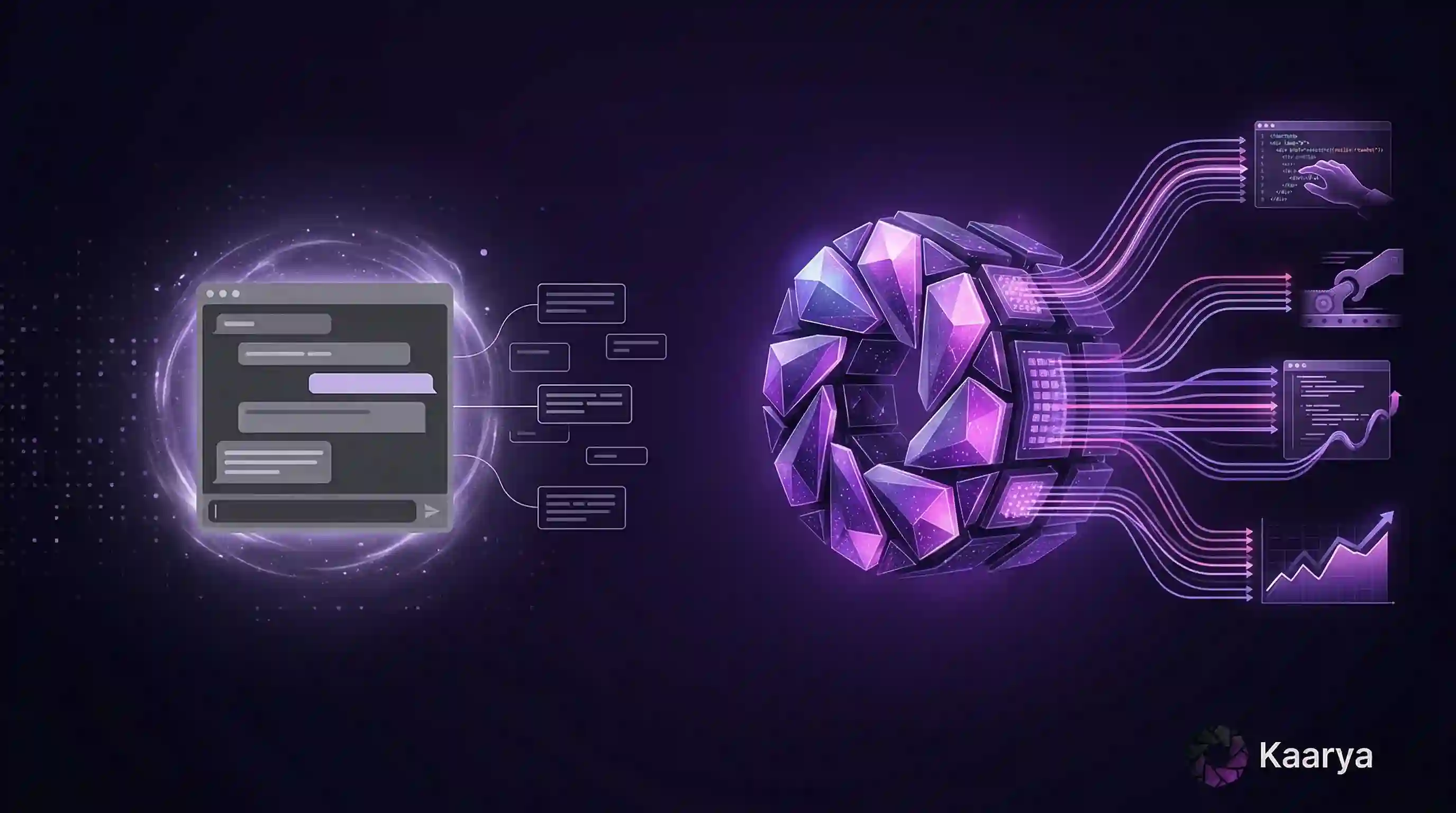
An AI business automation platform for small business should help a lean team execute repeatable customer work: reply to leads, qualify intent, book appointments, send reminders, collect context, and follow up. It should not be a vague "AI platform" with no operating role.
Direct answer
Small businesses should use AI business automation when customer work is slipping because the team is busy. Kaarya helps automate response, follow-up, booking, reminders, WhatsApp workflows, and human handoff across service operations.
Small businesses do not usually fail because they lack another app. They fail to convert because the next step is late, unclear, or forgotten. The owner is busy. The receptionist is handling walk-ins. The sales person is on another call. The customer waits and moves on.
AI automation is useful only when it changes that execution pattern.
What the platform should actually do
A practical AI business automation platform should make common workflows more reliable.
- capture new inquiries from the channels customers use
- respond fast with the right next question
- qualify the lead without overcomplicating intake
- schedule or request preferred timing
- send reminders and follow-up messages
- keep staff updated when human action is needed
The point is not to automate for novelty. The point is to make the business harder to ignore and easier to buy from.
Where Kaarya fits
Kaarya fits when a small business needs an execution layer, not just another place to store customer records. It helps customer conversations become actions: reply, qualify, book, remind, collect payment, or escalate.
For service businesses, that is where the value sits. A lead record is useful, but a lead that gets answered and followed up is more useful.
Practical workflow example
A home service company receives a plumbing inquiry after business hours. Kaarya can acknowledge the request, ask for location and urgency, collect a photo if needed, schedule a visit window, send a reminder, and alert staff if the issue sounds urgent.
| Platform type | Strength | Limitation |
|---|---|---|
| CRM | Stores contacts and deals | Still needs manual action |
| Chatbot | Answers common questions | May stop at conversation |
| Calendar tool | Books time | Does not qualify or follow up |
| AI execution platform | Connects response to action | Needs clear business rules |
Evaluation checklist
Use this checklist before choosing a platform:
- Does it explain what it automates in plain language?
- Does it support phone, WhatsApp, web, or social leads?
- Can humans take over with context?
- Can it support reminders and follow-up?
- Does it avoid unsupported claims or black-box answers?
- Can it fit the workflows you already run?
If a tool cannot describe the operational moment it improves, it may be more demo than system.
How small businesses should roll it out
A small business should roll out AI automation in phases. Phase one should be a workflow with low risk and high repetition, such as missed-call recovery, appointment reminders, or basic lead intake. Phase two can add qualification and routing. Phase three can connect payments, document reminders, reactivation, and more advanced handoff.
This phased approach keeps the business in control. Staff can see how customers respond, refine questions, adjust escalation rules, and decide where automation should stop. It also prevents the common mistake of launching a broad system before the business has clear operating rules.
The owner should review real conversations during the first weeks. Look for places where customers repeat themselves, where the AI asks unnecessary questions, where handoff is late, or where staff still need to chase manually. Those are the places to improve.
What a platform should prove
An AI business automation platform should prove that it can reduce operational drag. It should show what happened to each lead, what next step was triggered, when a human was alerted, and whether the customer moved forward.
It should also integrate with the channels the business actually uses. For many service businesses, that means phone and WhatsApp before complex enterprise systems. Instagram, website forms, calendar, payments, and documents can matter too, but only if they connect to the customer journey.
Kaarya fits when the business wants one execution path across these moments. A lead should not become invisible because it entered through the wrong channel.
Mistakes to avoid
Avoid vague prompts like "be an AI assistant for my business" without workflow rules. Avoid automating sensitive decisions. Avoid judging success only by response speed. A fast wrong answer can hurt trust faster than a slow one.
The best platform makes the business more reliable, not merely more automated.
What to measure after launch
The most useful launch metrics are practical: response time, leads qualified, appointments booked, reminders sent, payments prompted, customers reactivated, and staff escalations completed. These show whether AI automation is improving daily operations.
Do not stop at activity metrics. A thousand automated messages do not matter if customers still fail to book or staff still chase manually. Review whether automation reduced the owner's workload and made the customer journey clearer.
Kaarya fits when the small business can start with one workflow and expand gradually. The goal is not to become an "AI company." The goal is to make a service business more responsive, consistent, and easier to run.
Frequently asked questions
What is an AI business automation platform?
It is software that uses AI to help repeatable business work happen with less manual effort, especially lead response, qualification, booking, reminders, and follow-up.
Is this different from a chatbot?
Yes. A chatbot usually focuses on conversation. A business automation platform should connect conversation to operational outcomes.
Can small businesses use AI automation safely?
Yes, when the system has clear rules, good escalation, and limited authority for sensitive or complex decisions.
Where should a business start?
Start with one workflow that loses revenue today, such as missed calls, no-shows, quote follow-up, or delayed lead response.
Map your first automation workflow
See the Kaarya workflow model for lead response, qualification, booking, reminders, and handoff.
How it worksKaarya executes the follow-ups, reminders, and operational work your team shouldn’t be doing.
Automate WhatsApp, voice, and revenue operations so you can focus on growth.