
Chatbot vs AI Agent vs Execution System: What's Actually Different (2026)
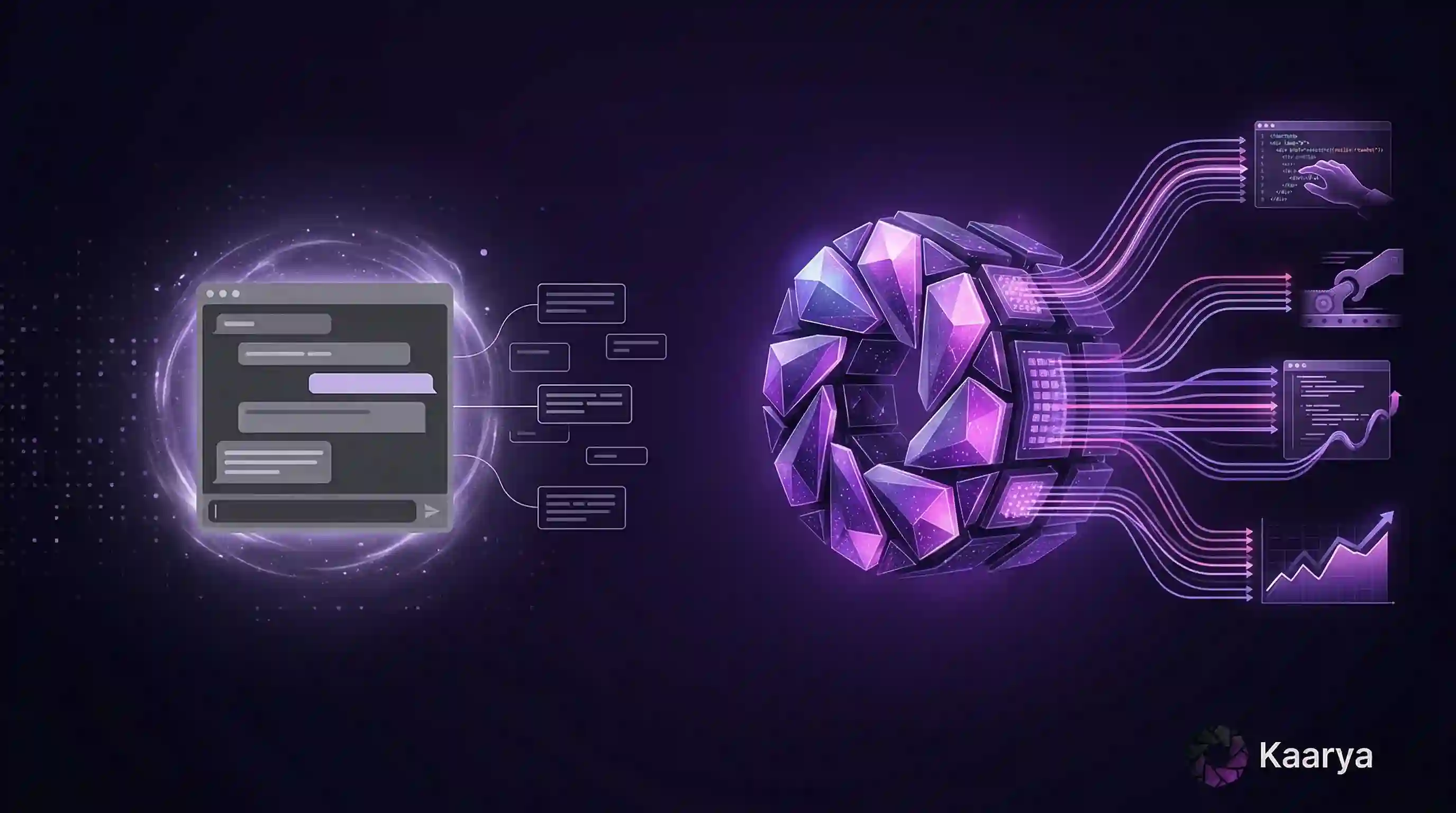
Every month the terminology gets more confusing. Chatbot used to mean a simple decision tree. Now it's used to describe everything from a basic FAQ bot to a GPT-powered conversational agent that can book appointments, send payments, and route escalations.
Clarity matters here — because choosing the wrong tool is expensive.
Quick Definitions
Chatbot: rule-based or AI-powered conversation layer. Responds to messages. Does not initiate or complete actions outside the conversation.
AI agent: language model that can use tools, retrieve information, and execute multi-step tasks within a defined scope.
Execution system: an orchestration layer that drives complete business workflows from lead arrival to outcome — across channels, time, and without constant human supervision.
The chatbot: what it actually does and doesn't do
A chatbot — even an AI-powered one using GPT or a similar model — is fundamentally a conversation interface.
It responds when spoken to. It answers questions, captures information, and can hand off to a human. Advanced chatbots can maintain conversation context across messages and handle nuanced queries.
What a chatbot does not do:
- Initiate contact (it waits to be messaged)
- Follow up if there's no response
- Book an appointment without a third-party integration being explicitly configured
- Send a payment link at the right moment in a workflow
- Know that this same lead messaged 3 days ago and hasn't been followed up
A chatbot is reactive. It exists inside the conversation. When the conversation ends — or never starts — the chatbot has no value.
The AI agent: expanded capability, same fundamental limit
An AI agent (in the current technical sense) can use tools. It can search the web, query a database, call an API, send a message, create a calendar event.
This is significantly more capable than a chatbot. An AI agent can, when asked, look up a customer's history, check availability, and send a booking confirmation.
The key phrase is when asked. AI agents in 2026 are still largely reactive — they act when prompted. They don't proactively manage a workflow. They don't wake up at 11 PM to follow up on a lead that hasn't responded. They don't know that a payment reminder was due yesterday.
AI agents are powerful tools for humans who know how to prompt them. For business automation, they're a building block — not a complete system.
The execution system: the complete workflow layer
An execution system operates differently from both.
Rather than waiting to be prompted (chatbot) or responding to explicit requests (AI agent), an execution system is goal-oriented. It knows what outcome it's trying to achieve — convert a lead, collect a payment, complete an appointment cycle — and takes the actions required to move toward that goal, across time.
This means it:
- Initiates — sends the first message when a lead arrives, without being prompted
- Qualifies — asks the right questions at the right moment in the conversation
- Follows up — if there's no response in 24 hours, it sends a follow-up. Then another.
- Acts across channels — the same lead might be reached via WhatsApp, then voice, then SMS, depending on what's worked
- Handles outcomes — books the appointment, sends the confirmation, captures the payment
- Escalates intelligently — brings a human in when the conversation requires judgment, with full context
The complete comparison
| Capability | Chatbot | AI Agent | Execution System |
|---|---|---|---|
| Answers questions | ✓ | ✓ | ✓ |
| Captures lead info | ✓ | ✓ | ✓ |
| Initiates outreach | ✗ | ✗ | ✓ |
| Follows up automatically | ✗ | ✗ | ✓ |
| Works across channels | Partial | Partial | ✓ |
| Books appointments | With integration | With prompt | ✓ |
| Sends payment links | With integration | With prompt | ✓ |
| Manages workflow over time | ✗ | ✗ | ✓ |
| Requires human to prompt/supervise | Reactive | Yes | Minimal |
| Works at 2 AM without anyone watching | ✗ | ✗ | ✓ |
Why this matters for service businesses
For a B2B SaaS company with a full sales team, an AI agent or a GPT-powered chatbot might be enough. The team provides the execution layer — they decide when to follow up, when to escalate, when to close.
For a service business — a clinic, a real estate agency, an education consultant — the team is occupied doing the service itself. There's no dedicated ops layer to manage follow-ups, qualify leads, chase payments, and handle after-hours inquiries.
The execution system is what the service business needs. Not a better chatbot. Not another AI tool that works when someone prompts it. A system that runs the operational workflow without requiring someone to supervise every step.
How to know which you actually need
Ask yourself: When a lead arrives at 9 PM on a Friday, what happens?
- If the answer is "nothing until Monday morning" → you need an execution system
- If the answer is "a chatbot replies but nobody follows up" → you need an execution system
- If the answer is "our AI agent can handle it if I log in and prompt it" → you need an execution system
The chatbot answered. The AI agent assisted. Neither converted. The execution system runs the workflow to completion — independently, intelligently, and at any hour.
Move beyond chatbots
Kaarya is an execution platform — not a chatbot. It runs your lead-to-payment workflow so you don't have to supervise it.
See the execution differenceKaarya executes the follow-ups, reminders, and operational work your team shouldn’t be doing.
Automate WhatsApp, voice, and revenue operations so you can focus on growth.